How to Make the Home Safer, Room by Room
The house your mom has lived in for years can start to work against her. A dark rug edge looks like a step. The stove is left on. A bottle under the sink looks like something to drink. You want her to stay home, in the rooms she knows, with the people she loves. You do not need a full renovation. You need a short list of changes that give her more freedom to move, not less. One room this weekend is enough.
Why a Familiar House Gets Risky
Alzheimer's and related dementias change how someone sees, judges, and reacts. The rooms stay the same. The way your mom reads them does not.
Steps, Edges, and Floor Changes
Depth perception is the ability to judge how near or far something is. A person with Alzheimer's may think a change from carpet to tile is a step, causing them to stumble or trip.[1]
Heat, Smoke, and Things That Look Like Food
People with Alzheimer's may not be able to smell smoke or an unlit gas stove.[1] Use smoke detectors and natural gas detectors, and check that they work.[1] It may be difficult for her to tell the difference between hot and cold.[2] Some things that are not food can look like food.[1]
Fix the Urgent Things First
The National Institute on Aging says to correct any immediate dangers first, and then work on other ways to keep the home safe.[1]
Light, Railings, and the Walking Path
Fix a loose stair railing.[1] Add light where the hall, the stairs, or a doorway is dim.[1]
Medicines, Cleaners, and Weapons
Lock these items or remove them from the home: medicines, alcohol, cleaning and household products (including paint thinner, matches, rubbing alcohol, and laundry detergent pods), poisonous plants, guns and other weapons, scissors, knives, power tools and machinery, and gasoline cans and other flammable items.[1] Place medications in a locked drawer or cabinet. Store guns in a locked cabinet or remove them. Keep cleaning products secured and out of sight.[2]
A Weekend Order That Does Not Overwhelm
One Room, Then the Next
You do not have to finish the whole house in a day. Pick the room where a fall or a burn is most likely this week. Next weekend, choose the next room.
What a Visitor Can Do in an Afternoon
Your sister might say, "I have two hours. Where do you want me?" You can answer, "The hall and the stairs. The tape is in the drawer. Please leave the blue chair where it is. Mom uses it to find the bathroom." She can also leave a short list of emergency numbers and the home address by the phone.[1] She does not need to rearrange the rooms your mom knows.
Entry, Halls, and Stairs
Handrails and Marked Edges
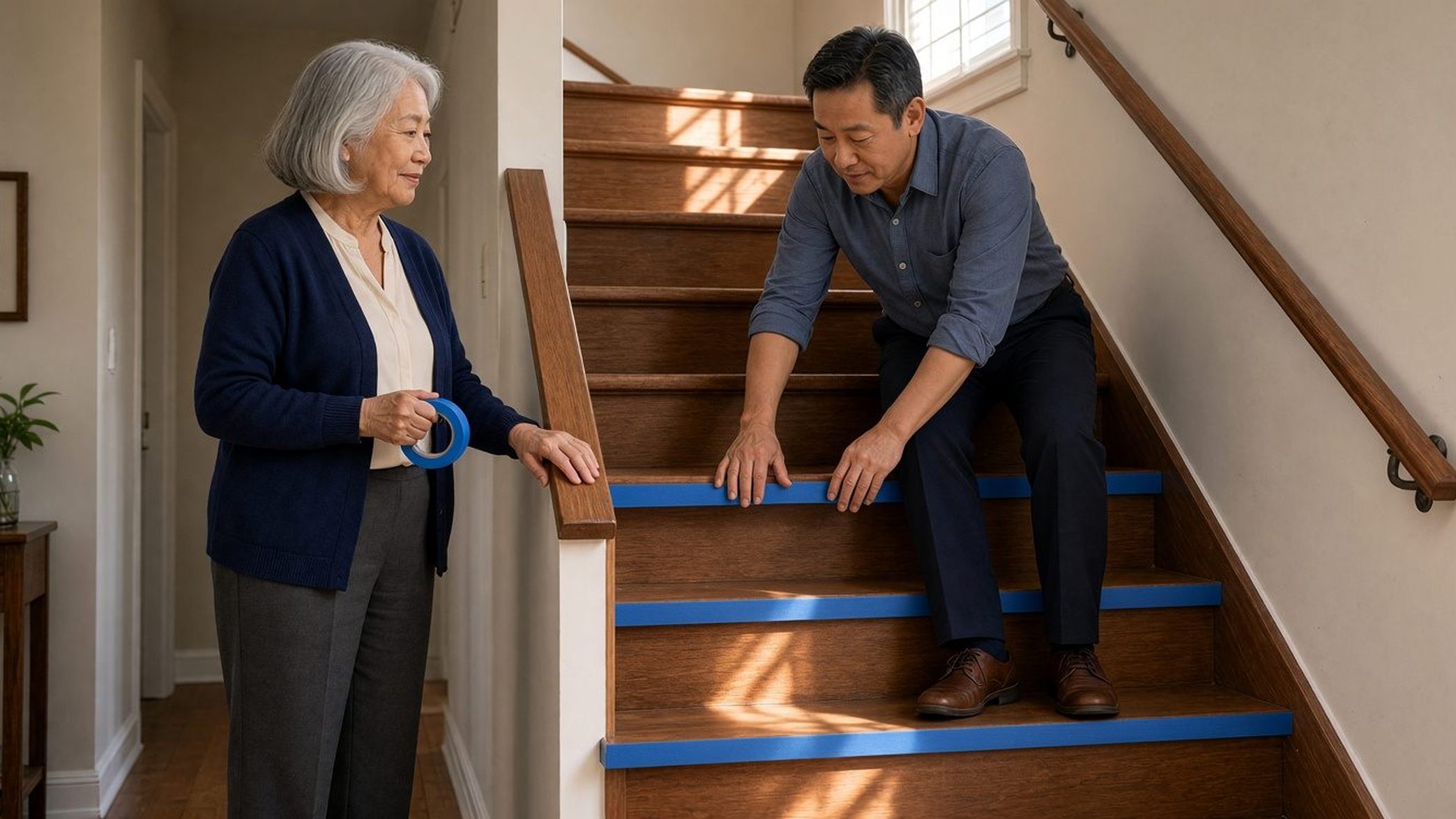
Keep a sturdy handrail on the stairs. Put brightly colored tape on the edge of each step so she can see where each step ends.[1]
Rugs, Cords, and Even Light
Take up throw rugs, move extension cords, and clear excessive clutter.[2] Add light in entries, outside landings, and the areas between rooms, stairs, and bathrooms.[2]
Kitchen
The Stove and the Disposal
Add an automatic shut-off on the stove, and consider disconnecting the garbage disposal.[1][2] Add safety knobs.[1] When the stove is not in use, use knob covers, remove the knobs, or turn off the gas.[2] If you post a sign near the oven, use words such as "Stop!" or "Don't Touch. Very Hot!" Do not put the sign so close that it could catch fire.[1]
Knives, Cleaners, and Food That Is Not Food
Lock knives and cleaners, as in the list above. Remove artificial fruits and vegetables and food-shaped magnets. Check the refrigerator often and throw out food that has gone bad.[1]
Bathroom
Bars, a Seat, and a Floor That Grips
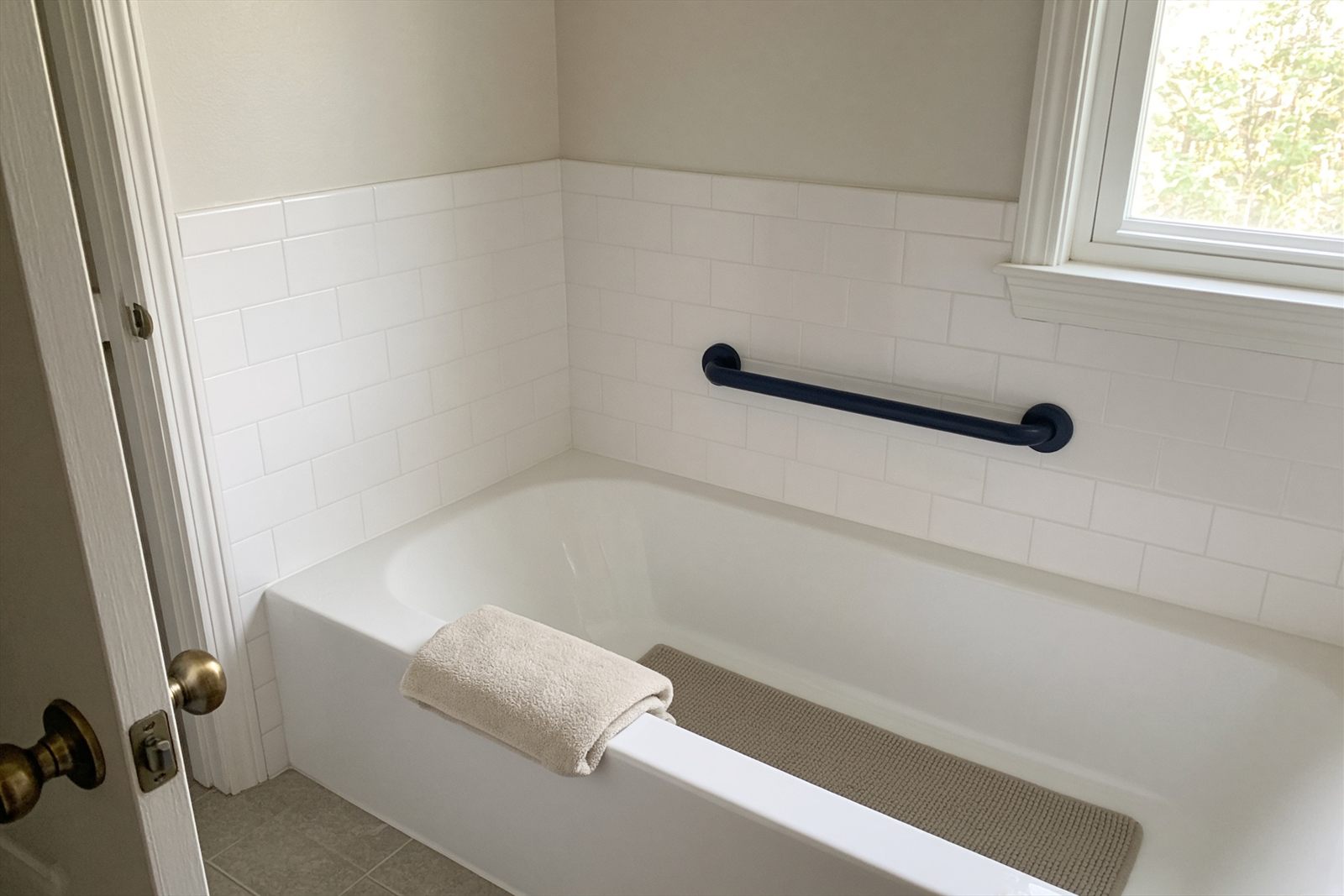
Install grab bars in the tub and shower.[1][2] Choose a grab bar in a color that contrasts with the wall, so it is easier to see.[1] Use nonskid strips, decals, or a mat in the tub and shower.[1] Apply textured stickers on slippery surfaces.[2] Use a plastic shower stool and a hand-held shower head.[1]
Hot Water and Small Appliances
Set the water heater to 120 degrees F so the tap is less likely to scald.[1] If you are not sure how to change that setting, ask someone who is qualified to do it. Label the hot faucet red and the cold faucet blue, or write the words hot and cold near them. Remove small electrical appliances from the bathroom and cover the outlets. Put away or lock toothpaste, lotions, shampoos, soap, and perfume.[1]
Bedroom and Living Areas
Night Light and a Clear Path
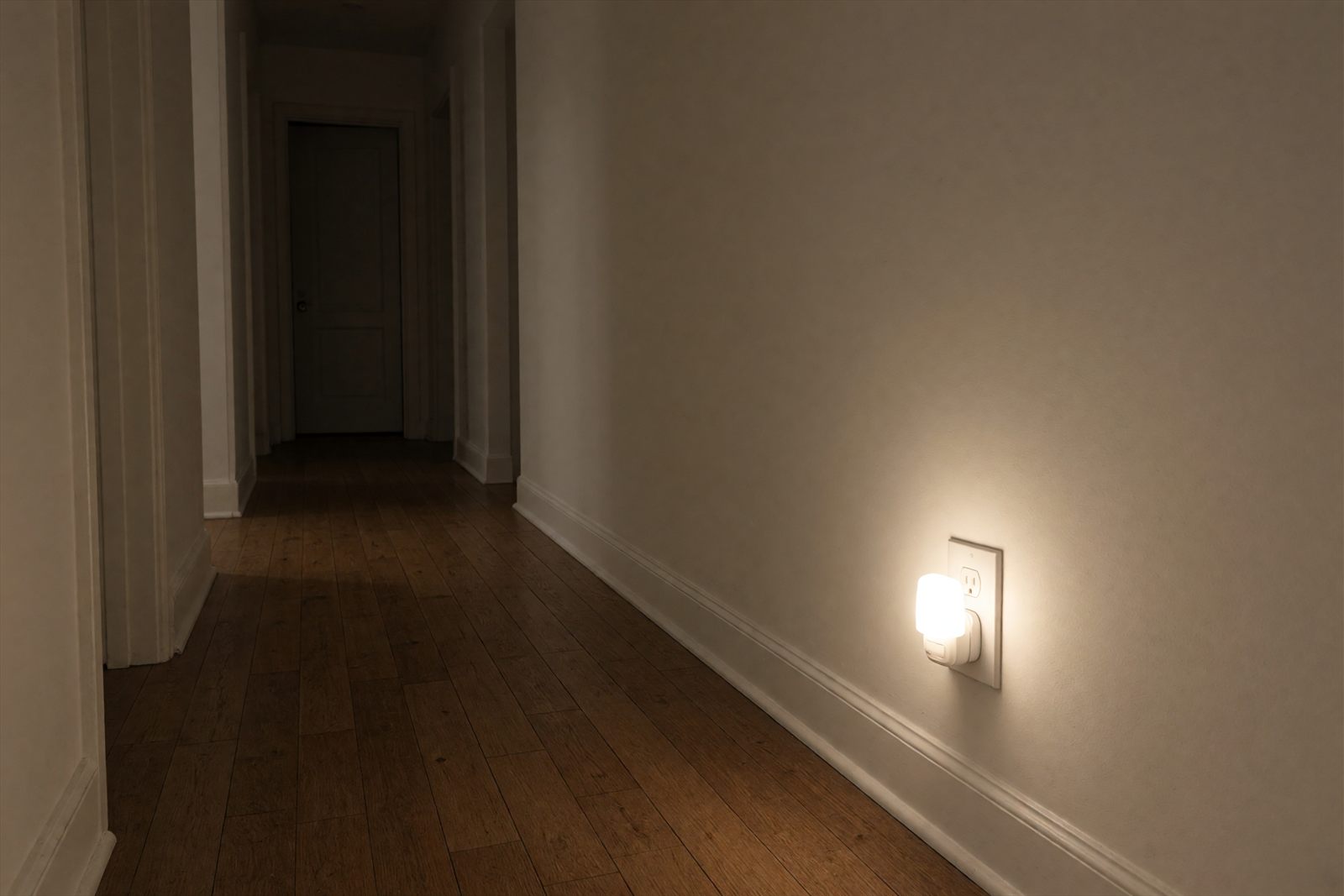
Install night lights in hallways, bedrooms, and bathrooms.[1][2] Provide seating near the bed to help with dressing, and use chairs with armrests for support when standing up.[2] Keep closet shelves at a height she can reach, so she is less likely to climb.[2]
Heaters, Mirrors, and Busy Patterns
Remove portable space heaters.[1] If you use a heating pad or an electric blanket, keep the controls out of her reach.[1] Monitor an electric blanket or a heating pad closely to prevent burns.[2] Limit the number and size of mirrors, because a reflection may confuse her.[1] Avoid busy patterns.[1] You do not have to remove every pattern. Cover or take down the ones that cause trouble.
Garage, Basement, and Exits
Tools, Fuel, and Machinery
Limit access to lawn equipment. Keep gasoline and paint thinner out of reach. Install a motion sensor on the garage door.[2] Power tools and machinery belong in the locked list above.[1]
A Door That Tells You It Opened
Place a latch or deadbolt above or below eye level on exterior doors.[2][3] Keep an extra set of keys hidden near the door for easy access.[2] Remove locks on interior doors so your mom cannot lock herself in.[2] Never lock her in.[3] She still needs a way out if there is a fire. If she is no longer driving, remove her access to the car keys.[3]
If your mom is missing, start the search immediately. The Alzheimer's Association gives these numbers. Many individuals who wander are found within 1.5 miles of where they disappeared. If she is not found within 15 minutes, call 911 to file a missing person's report. Inform the authorities that she has dementia.[3]
If a fall or a near-burn has already happened, talk with a clinician about what to change in that room.
Three moves for this weekend: lock medicines and cleaners, clear one walking path, and mark the stair edges. A safer house is a kinder house, not a stricter one. It gives your mom more of the home she already knows.
Sources
- National Institute on Aging. Alzheimer's Caregiving: Home Safety Tips. Content reviewed August 2, 2024. https://www.nia.nih.gov/health/safety/alzheimers-caregiving-home-safety-tips
- Alzheimer's Association. Home Safety. https://www.alz.org/help-support/caregiving/safety/home-safety
- Alzheimer's Association. Wandering. https://www.alz.org/help-support/caregiving/stages-behaviors/wandering